Gharaunda Scheme 2026 – Lifelong Residential Care for Adults with Disabilities
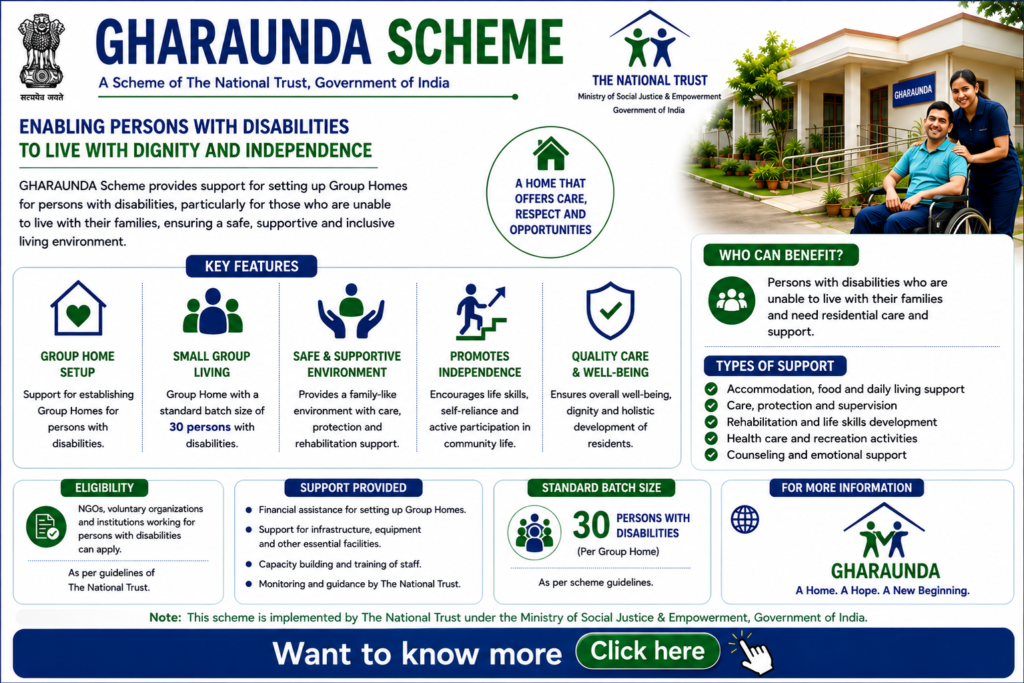
Gharaunda (Group Home for Adults) Scheme is a scheme of the National Trust that aims to provide lifelong residential care and shelter to eligible adult Persons with Disabilities covered under the National Trust Act.
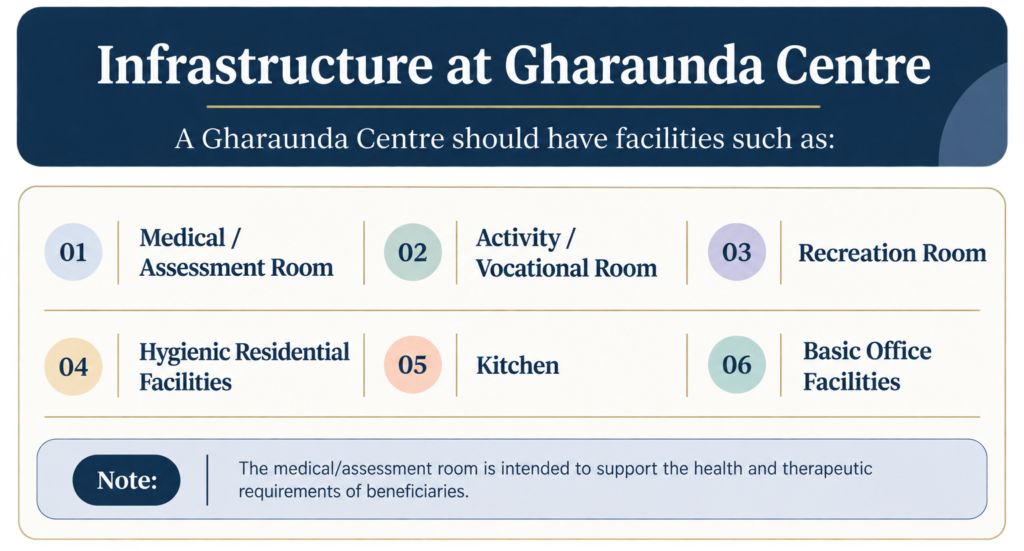
The scheme is designed to provide a safe, supportive and dignified living environment for adults who may require long-term care and support. Gharaunda Centres provide residential facilities along with basic medical care, daily living assistance, recreational activities and opportunities for vocational and pre-vocational development.
Who is Gharaunda Scheme For?
Gharaunda is primarily for adult Persons with Disabilities above 18 years covered under the National Trust framework, including persons with:
Autism
Cerebral Palsy
Intellectual Disability
Multiple Disabilities
The scheme is particularly relevant for adults who require long-term residential support and care.
What Does Gharaunda Provide?
Gharaunda Centres are designed to provide a group-home environment with appropriate care and support.
Key Facilities Include:
🏠 Lifelong residential care
❤️ Safe and supportive living environment
👨⚕️ Basic medical care
🧑🏫 Vocational & pre-vocational activities
🧩 Daily living support
🎨 Recreational activities
🧑🦽 Therapeutic / functional support
🍽️ Hygienic lodging and food facilities
👥 Social interaction and community living
The exact services and facilities may vary depending on the individual Gharaunda Centre.
Lifelong Group Home
The main feature of Gharaunda is its lifelong group-home facility for adult persons with disabilities.
The objective is to ensure that beneficiaries have a stable place to live and receive appropriate care and support throughout their lives. Centres are expected to maintain acceptable living standards and provide basic medical care through professional doctors.
A standard Gharaunda Centre has a batch size of 20 persons, with a maximum permitted enrolment of 26 persons under the scheme provisions.
Vocational & Skill Development
Gharaunda is not limited to residential care. Centres are also expected to provide opportunities for vocational activities, pre-vocational activities and further training. These activities can help adults with disabilities:
Develop functional skills
Maintain existing abilities
Learn work-related skills
Participate in meaningful activities
Improve confidence and independence
Engage in suitable vocational opportunities
Medical & Care Support
Gharaunda Centres are expected to provide basic medical care from professional doctors along with appropriate caregiving support.
The centres also have provisions for staff such as special educators/vocational trainers, physiotherapists or occupational therapists, caregivers, ayas and cooks. Availability of speech therapy and physical training support is also desirable under the scheme.
Eligibility for Beneficiaries
To enrol under Gharaunda, the beneficiary should generally:
Be above 18 years of age
Have one of the disabilities covered under the National Trust Act
Meet the applicable requirements of the Gharaunda Centre
Complete the required assessment and documentation process
The National Trust identifies the covered disabilities as Autism, Cerebral Palsy, Intellectual Disability and Multiple Disabilities.
Documents Generally Required
Parents or guardians may be asked to provide:
Enrolment Form
Birth Certificate / Date of Birth Proof
Disability Certificate
BPL / Income Certificate, where applicable
Parent / Guardian ID Proof
Legal Guardianship Certificate, where applicable
Other documents required by the Gharaunda Centre
For orphaned, abandoned persons or persons from families in crisis, additional certification may be required from the competent authority.
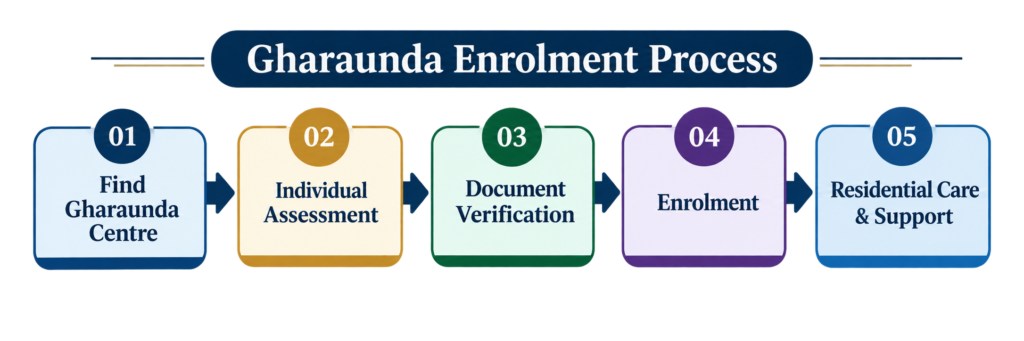
How to Enrol in Gharaunda?
During the enrolment process, the centre assesses the individual’s requirements and verifies the required documents. After successful verification, the beneficiary is enrolled and the centre provides information regarding the residential arrangement, rules and other applicable requirements.
Who Runs Gharaunda Centres?
Gharaunda Centres are implemented through Registered Organisations (ROs) of the National Trust. The organisation running the centre must fulfil the applicable National Trust requirements, including registration and experience criteria.
Gharaunda for Families
For families, Gharaunda can provide an important long-term care option for an adult with disability who may require continuous residential support.
The scheme aims to ensure that the person receives care, safety, medical support, meaningful activities and an appropriate living environment, while also providing families with greater reassurance about the person’s long-term support needs.
Important Note
Availability of Gharaunda Centres, admission procedures, fees/charges, facilities and residential arrangements may vary from one centre to another. Parents and guardians should confirm the latest eligibility requirements and availability directly with the concerned Gharaunda Centre or National Trust before applying.
Also, some Registered Organisations operate under the Samarth-cum-Gharaunda (Residential) merged scheme, so it is advisable to check the current scheme status of the centre.