Badhte Kadam Scheme – Awareness & Community Inclusion
Awareness | Sensitisation | Social Inclusion | Community Participation | Innovative Projects
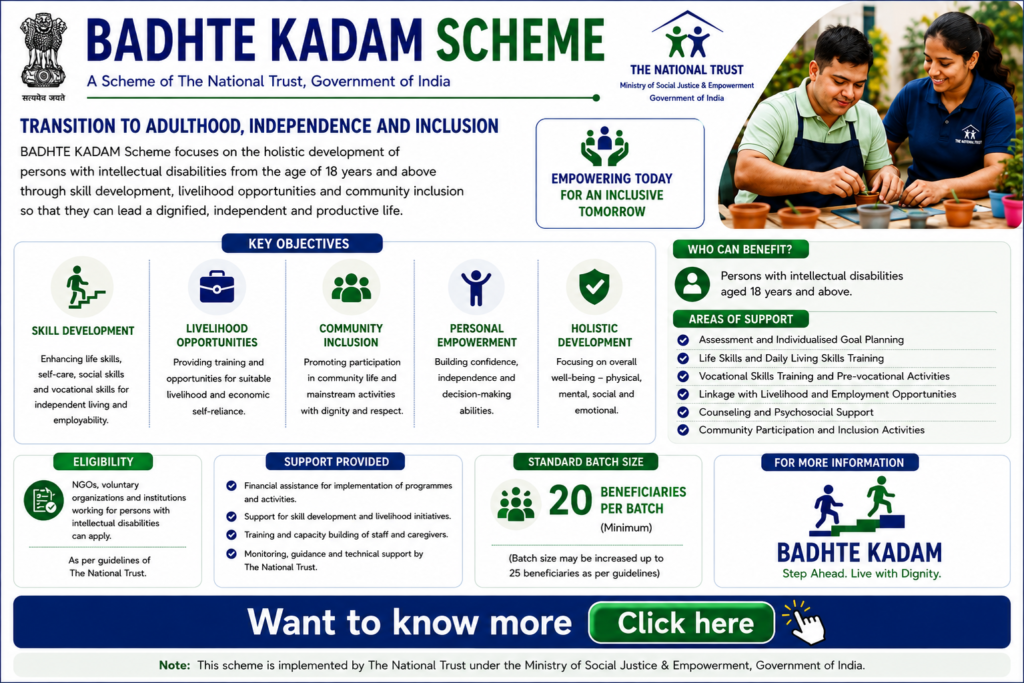
Badhte Kadam (Awareness, Community, Interaction & Innovative Project) Scheme is an initiative of the National Trust focused on creating awareness about disabilities, promoting social inclusion and encouraging greater participation of Persons with Disabilities in society.
The scheme aims to reduce myths, misconceptions and stigma related to disability and promote a better understanding of disability, inclusion and disability etiquette. It also helps spread information about the various National Trust schemes and available support among Persons with Disabilities, families, professionals and the wider community.
Main Objectives of Badhte Kadam
The scheme focuses on:
Awareness about disability
Social inclusion & integration
Community sensitisation
Promoting participation of Persons with Disabilities
Reducing myths and misconceptions
Promoting disability etiquette
Spreading information about National Trust schemes
Reaching underserved and remote areas
Encouraging innovative inclusion projects
Who Can Benefit from Badhte Kadam?
Badhte Kadam activities are designed to reach a wide range of people connected with disability and the community.
Target Groups Include:
👨👩👧 Families & Guardians of Persons with Disabilities
🏫 Schools & Educational Institutions
👨🎓 Students & Teachers
🏥 Medical Professionals
⚖️ Legal Professionals
🏦 Banks & Financial Institutions
🏛️ Government Officials
🤝 NGOs & Community Organisations
🌍 General Public & Community
The objective is to ensure that disability awareness reaches beyond specialised organisations and becomes part of the wider community.
What Activities Are Covered?
The National Trust supports different types of awareness and community-based activities through Registered Organisations.
1. Government Collaboration
Activities may include:
Participation in government campaigns
Conferences and meetings
Fairs and exhibitions
Awareness programmes
Information distribution through relevant institutions
2. Educational Awareness
Schools, colleges and educational institutions can be engaged through:
Awareness sessions
Student sensitisation programmes
Teacher awareness programmes
Workshops on disability inclusion
Disability etiquette sessions
3. Medical & Professional Sensitisation
Awareness activities can also be organised for:
Doctors and medical professionals
Therapists
Legal professionals
Bank and financial staff
Government officials
Other community stakeholders
4. Media & Digital Awareness
The scheme also encourages modern methods of spreading information, including:
Social media campaigns
Website-based information
Awareness videos
Print media
Television and radio
Internet-based campaigns
SMS-based information dissemination
Community Inclusion Activities
Badhte Kadam encourages activities that bring Persons with Disabilities and the wider community together. Examples may include:
Inclusive sports events
Art & painting competitions
Art exhibitions
Awareness programmes
School & college sensitisation events
Community workshops
Fairs and exhibitions
Inclusive community events
These activities help create opportunities for interaction and encourage people with disabilities to participate more actively in community life.
Innovative Projects
An important component of Badhte Kadam is its Innovative Project provision.
Registered Organisations can propose innovative projects designed to improve the quality of life of Persons with Disabilities covered under the National Trust Act. The National Trust can sanction up to ₹5 lakh per innovative project, subject to the applicable guidelines and approval process.
Who Can Apply?
Badhte Kadam is primarily implemented through Registered Organisations (ROs) of the National Trust.
An organisation applying under the scheme should generally:
Be registered with the National Trust
Have valid registration under the applicable disability legislation
Not be blacklisted by the National Trust or another government organisation at the time of application
Fulfil the applicable National Trust requirements
Important: This means Badhte Kadam is different from schemes such as Niramaya or Disha, where the beneficiary directly receives a service/benefit. Badhte Kadam primarily supports awareness and inclusion activities conducted through Registered Organisations.
How Many Activities Can Be Supported?
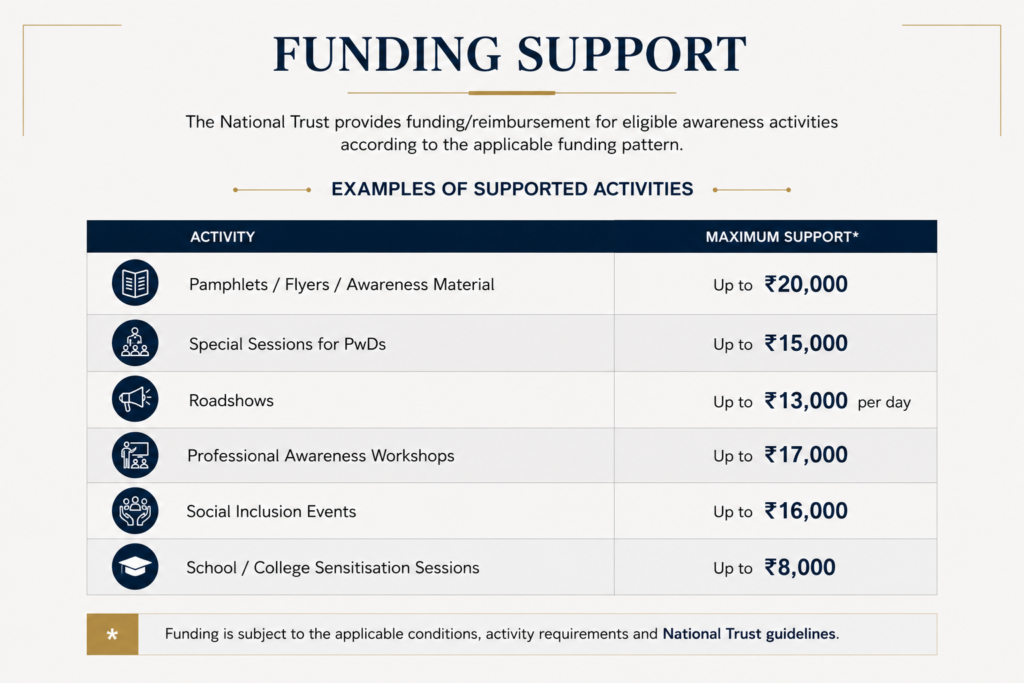
The National Trust can support up to 4 events per Registered Organisation in a year. At least one event should focus on community, educational or medical engagement.
Why is Badhte Kadam Important?
Disability inclusion is not only about providing services—it is also about changing attitudes and creating an inclusive society. Badhte Kadam works towards creating greater understanding of disability among schools, families, professionals, government bodies, financial institutions and the general public.
Through awareness campaigns, workshops, social events and innovative projects, the scheme encourages communities to understand disability better and create opportunities where Persons with Disabilities can participate, interact and contribute equally.
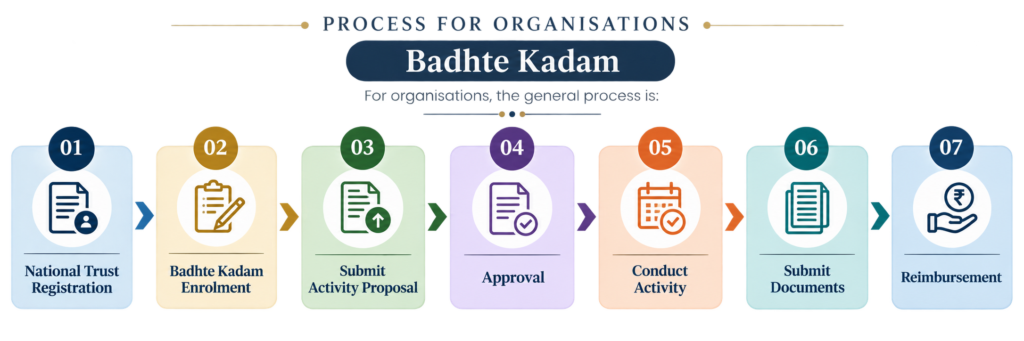
How to Participate / Apply?
The organisation may be required to submit activity details, supporting documents, expenditure information and reports according to the applicable requirements.
Important Note
Badhte Kadam is primarily an awareness and community-inclusion scheme implemented through Registered Organisations of the National Trust. The exact eligibility, funding limits, activities and documentation requirements may change according to the latest National Trust guidelines.
For the latest information, organisations should always verify the current requirements on the official National Trust website.