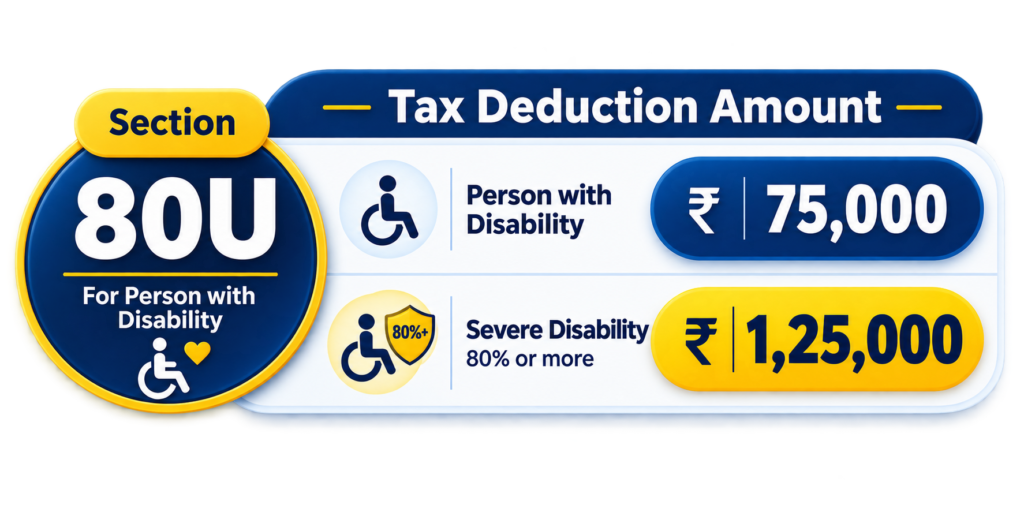
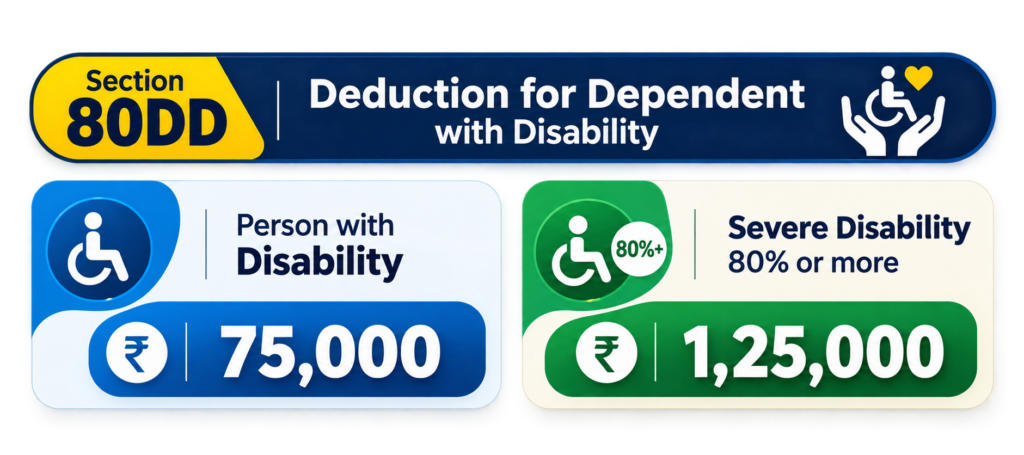
₹75,000 → Disability | ₹1,25,000 → Severe Disability (80%+)
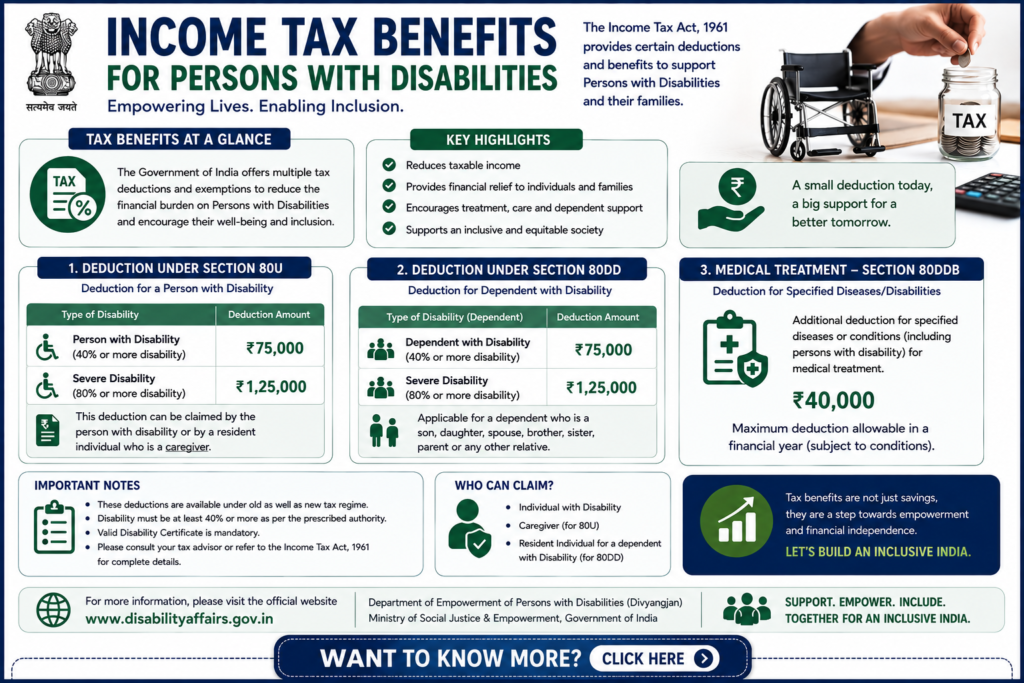
The Income Tax Act provides certain tax deductions for persons with disabilities and families supporting a dependent person with disability. These provisions can reduce taxable income when the taxpayer fulfils the prescribed conditions.
The two important provisions are Section 80U for a person with disability and Section 80DD for a taxpayer supporting a dependent person with disability.
Section 80U – For a Person with Disability
A resident individual taxpayer with disability can claim a fixed deduction under Section 80U, subject to the applicable conditions.
The deduction is a fixed amount, irrespective of the actual expenditure incurred.
Section 80DD – For a Dependent with Disability
Section 80DD provides a deduction to an eligible taxpayer for maintenance and medical treatment of a dependent person with disability, or for amounts paid/deposited under an approved scheme, subject to the applicable conditions.
This is also a fixed deduction, rather than a deduction based on the actual amount spent.
Important: Tax Regime
Section 80U and Section 80DD deductions cannot be claimed under the New Tax Regime. They are available when the taxpayer is eligible to claim deductions under the Old Tax Regime.
Documents & Compliance
For claiming these deductions, the Income Tax Department requires relevant disability details in the ITR. Depending on the case, this may include:
Nature and type of disability
Disability percentage/category
Form 10-IA details, where applicable
UDID Number, if available
For Section 80DD: details of the dependent, including PAN/Aadhaar as applicable.
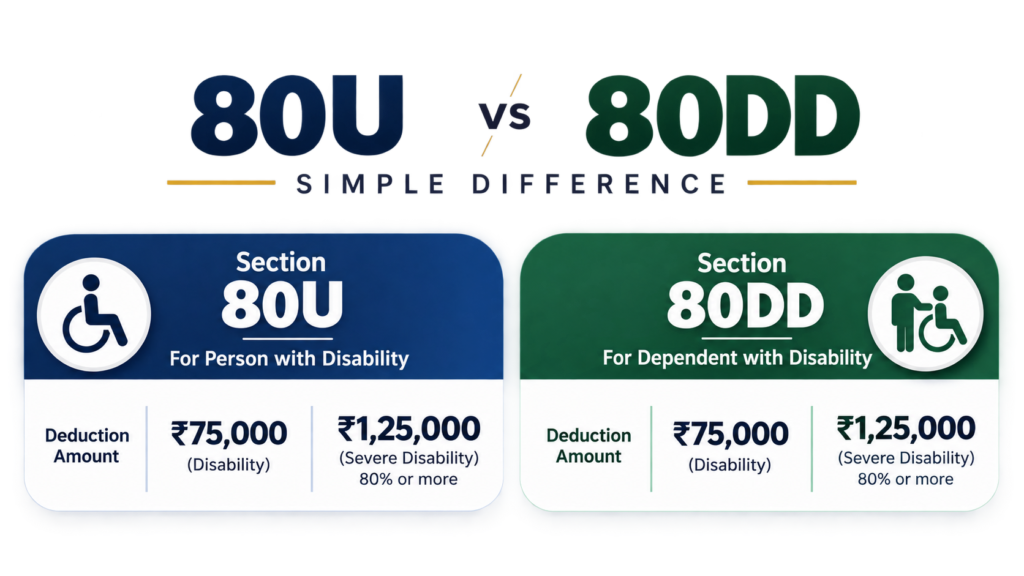
80U vs 80DD – Simple Difference
Important Note
A UDID Card or Disability Certificate does not itself guarantee a tax deduction. The taxpayer must fulfil the conditions prescribed under the relevant section and provide the required information/documents while filing the Income Tax Return.
Tax provisions can change through subsequent Finance Acts and notifications. Always verify the applicable provisions for the relevant Assessment Year before filing your ITR.